
Do You Have to Report Japanese Knotweed in Your Garden?
Many homeowners ask an important question:
Do you have to report Japanese knotweed in your garden?
The simple answer is no. There is currently no legal requirement in the UK to report Japanese knotweed to your local council if it is growing on your property.
However, property owners still have legal responsibilities for controlling the plant and preventing it from spreading.
Your Legal Responsibility as a Property Owner
Although you do not need to report Japanese knotweed, you must prevent it from spreading to neighbouring land.
If the plant spreads from your garden into a neighbour’s property, you could face legal action.
Several laws may apply in these situations, including:
-
Wildlife and Countryside Act 1981
-
Environmental Protection Act 1990
-
Anti-social Behaviour, Crime and Policing Act 2014
Under these laws, property owners must manage Japanese knotweed responsibly and prevent its spread into the wild or onto neighbouring land.
Can the Council Take Action?
In some situations, a local authority may take action if Japanese knotweed spreads and causes problems.
For example, councils may issue a Community Protection Notice (CPN) under the Anti-social Behaviour, Crime and Policing Act 2014.
This notice may require the property owner to control the infestation and prevent further spread.
Failure to comply with a notice can lead to fines or further enforcement action.
However, these situations remain relatively uncommon and usually occur only when the problem is ignored.
Selling a Property with Japanese Knotweed
If you plan to sell your property, the situation changes.
Sellers must disclose whether Japanese knotweed is present on the property.
This information appears on the TA6 Property Information Form, which forms part of the conveyancing process.
The form asks whether the seller is aware of Japanese knotweed growing:
-
on the property
-
within the property boundary
-
or on neighbouring land
Providing incorrect information on the TA6 form can lead to legal disputes after a property sale.
Japanese Knotweed and Building Work
If you plan construction or landscaping work, contractors should be informed if Japanese knotweed is present.
Construction activities can easily spread rhizomes through contaminated soil.
Before work begins, contractors should normally:
-
carry out a site inspection
-
Identify any knotweed growth.
-
Implement a management plan.
-
prevent contaminated soil movement
-
clean machinery before leaving the site
These steps help prevent accidental spread during development work.
Why Professional Treatment Is Recommended
Japanese knotweed spreads mainly through rhizome fragments in soil. Even very small pieces can grow into new plants.
Because of this, improper removal can often worsen the problem.
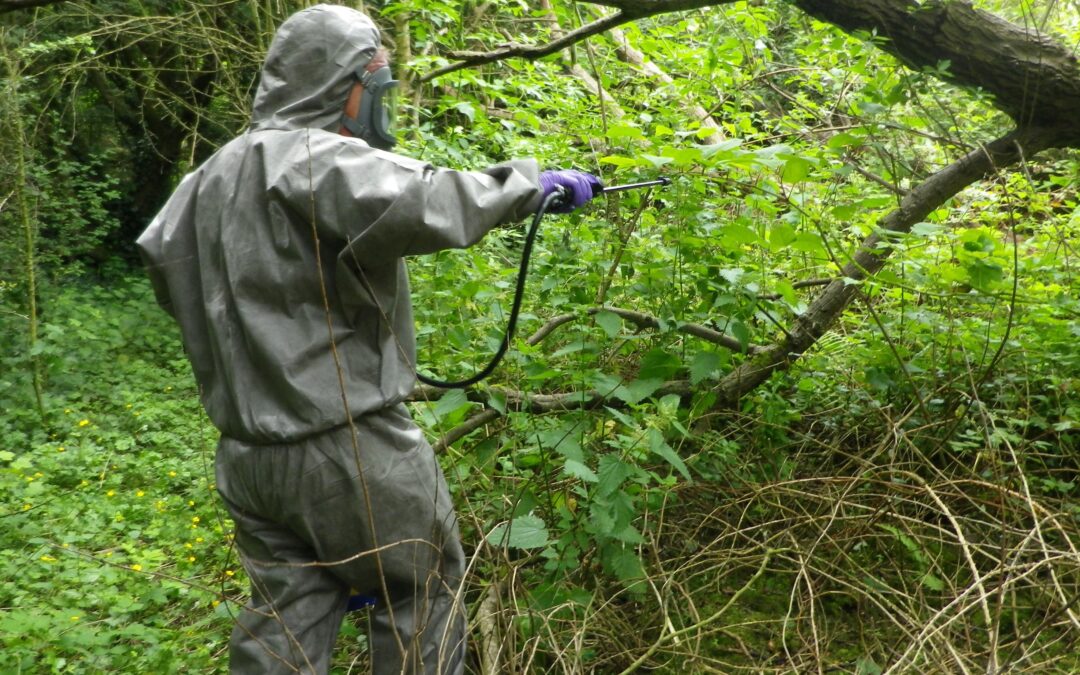
Professional treatment programmes usually involve:
-
herbicide treatment plans
-
excavation where necessary
-
monitoring over several years
These programmes also provide documentation useful for mortgage lenders and property sales.
Need Professional Advice?
If you suspect Japanese knotweed in your garden, early action helps prevent the plant from spreading further.
A professional survey can confirm the infestation and recommend the best treatment plan.
Stephen Singleton
PCA-Accredited Japanese Knotweed Surveyor
📞 07753 682333
Early treatment protects your property and helps prevent disputes with neighbouring landowners.