
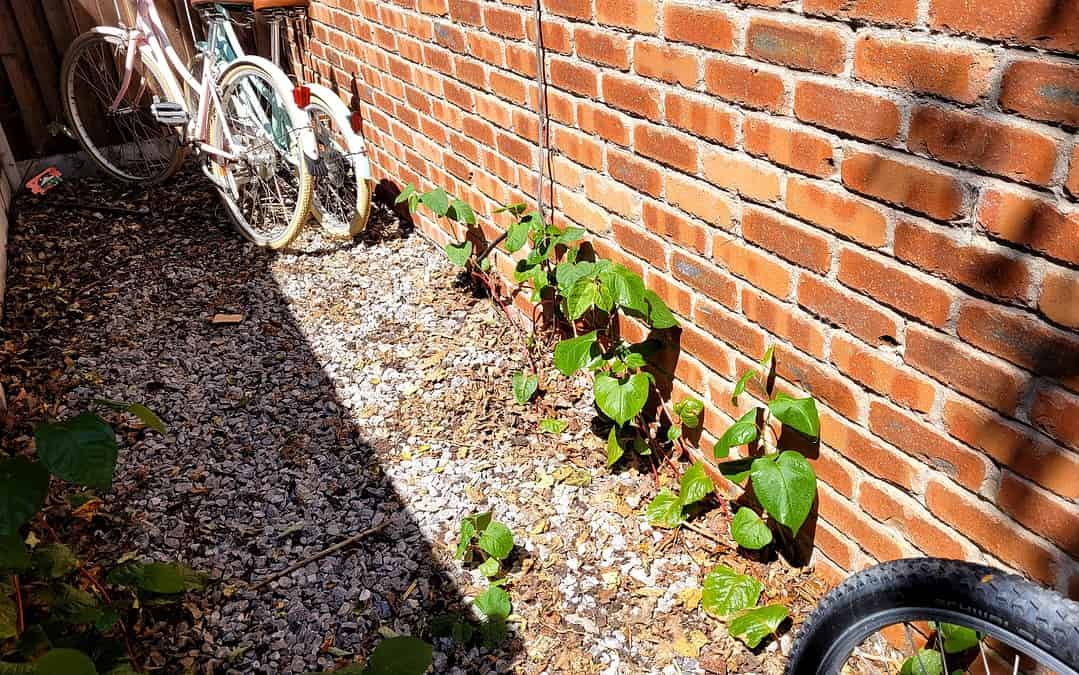
Can You Legally Remove Japanese Knotweed Yourself in the UK?
Many homeowners ask an important question: Can I legally remove Japanese knotweed myself?
The short answer is yes. However, strict legal responsibilities apply in the United Kingdom. You must prevent the plant from spreading and dispose of any waste correctly.
Because Japanese knotweed spreads aggressively, DIY removal can create serious problems. Therefore, many homeowners choose professional treatment instead.
Understanding the legal rules will help you make the right decision.
What Is Japanese Knotweed?
Japanese knotweed (Fallopia japonica) is one of the most invasive plants in the UK.
The plant arrived in Britain during the nineteenth century as an ornamental garden plant. However, it quickly escaped into the wild and spread across the country.
Japanese knotweed grows rapidly during spring and summer. Mature plants can reach three metres in height.
The biggest problem lies underground. The plant spreads through a strong rhizome system that can extend up to seven metres horizontally.
Because of this aggressive growth, Japanese knotweed can damage:
-
Garden walls
-
Patios and driveways
-
Drainage systems
-
Retaining walls
-
Light structures and garden buildings
As a result, the presence of Japanese knotweed can affect property value and mortgage approval.
Is It Legal to Remove Japanese Knotweed Yourself?
Yes. Homeowners in the UK can legally remove Japanese knotweed themselves.
However, several legal responsibilities apply.
Under the Environmental Protection Act 1990, Japanese knotweed is classified as controlled waste. This means the plant and contaminated soil must be disposed of correctly.
In addition, property owners must prevent the plant from spreading into neighbouring land.
Allowing Japanese knotweed to spread could lead to legal disputes with neighbours. In some cases, property owners have faced civil nuisance claims.
Because of these risks, careful management is essential.
Why DIY Japanese Knotweed Removal Is Difficult
Although DIY removal is legal, controlling Japanese knotweed is extremely challenging.
The plant’s underground rhizome system makes it very persistent.
Even tiny rhizome fragments can grow into new plants. A piece smaller than a fingernail may regenerate under the right conditions.
Because of this, cutting or digging the plant incorrectly can worsen the infestation.
Many DIY attempts fail because:
-
Rhizomes remain hidden deep in the soil.
-
Small fragments were spread during excavation.
-
Plant waste is disposed of incorrectly.
-
Herbicides are applied at the wrong time of year.
For these reasons, professional treatment often produces better long-term results.
Methods Used to Remove Japanese Knotweed
Several treatment methods are commonly used in the UK.
The best option depends on the size of the infestation and the surrounding environment.
Herbicide Treatment
Herbicide treatment remains the most widely used method for controlling Japanese knotweed.
Specialist contractors apply systemic herbicides directly to the plant. The chemical moves through the plant into the rhizome system.
Over time, this process weakens the underground growth.
Most treatment programmes take three to five years to achieve reliable control.
Excavation and Removal
Excavation involves removing the contaminated soil and rhizomes from the site.
This material must then be transported to a licensed landfill facility that accepts invasive plant waste.
Excavation can provide a faster solution, but it often costs significantly more.
Developers sometimes choose this method during building projects or landscaping works.
Biological Control
Researchers continue to investigate biological control methods.
One example is the Japanese knotweed psyllid, which feeds on the plant.
However, this method remains experimental and is not widely used in the UK.
Professional Japanese Knotweed Treatment
Professional treatment often provides the most reliable long-term solution.
Specialist companies usually offer:
-
Detailed site surveys
-
Professional treatment plans
-
Annual monitoring visits
-
Insurance-backed guarantees
These guarantees can help reassure mortgage lenders and property buyers.
As a result, professional treatment plans often allow property sales to proceed smoothly.
Why Early Treatment Is Important
Early identification makes Japanese knotweed far easier to control.
Small infestations usually respond well to herbicide treatment programmes. However, large infestations may require several years of management.
Acting early reduces the risk of the plant spreading to neighbouring properties.
Early treatment can also reduce overall treatment costs.
Japanese Knotweed Surveys and Treatment
If you suspect Japanese knotweed on your property, a specialist survey provides clarity.
A professional inspection confirms the plant’s presence and assesses the level of risk.
At Japanese Knotweed Plus, we provide professional surveys and treatment plans across the UK.
Our services include:
-
Japanese knotweed identification
-
Detailed survey reports
-
Professional treatment programmes
-
Long-term monitoring visits
If you need advice about Japanese knotweed, please contact:
Stephen Singleton
Japanese Knotweed Plus Ltd
Mobile: 07753 682333