
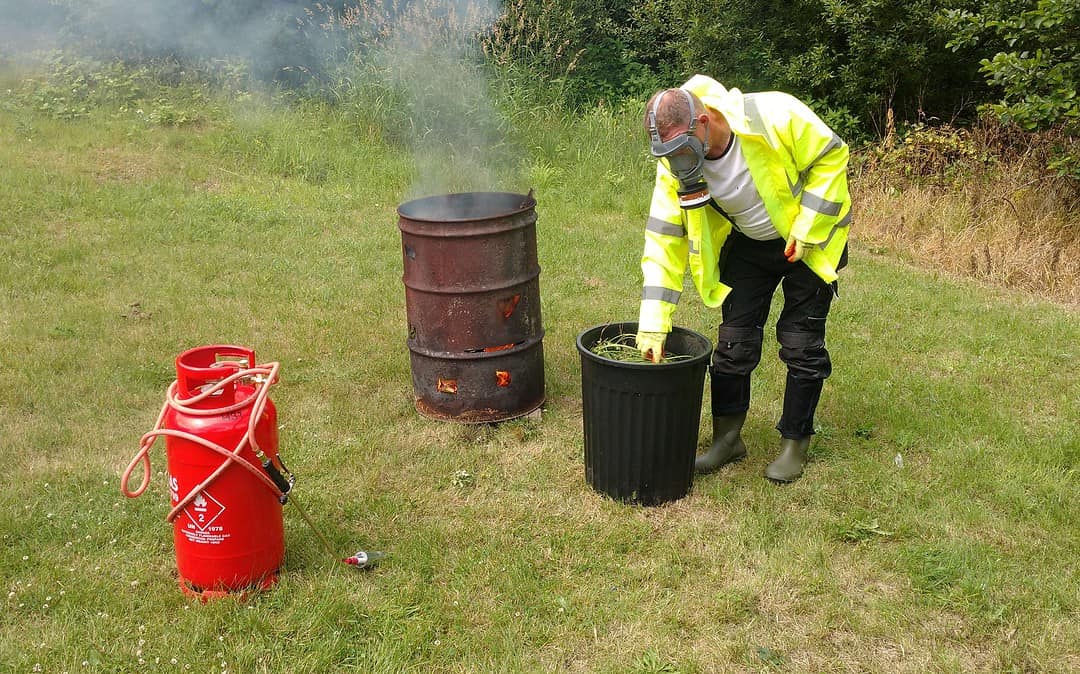
What Happens if You Burn Japanese Knotweed?
Burning Japanese knotweed may seem like a quick solution. However, this approach creates risks and rarely solves the problem.
Many property owners ask if burning Japanese knotweed will kill the plant. Unfortunately, burning knotweed is usually ineffective and sometimes unsafe.
Understanding the risks helps property owners manage this invasive plant correctly.
Why Burning Japanese Knotweed Is Not Effective
Japanese knotweed spreads through a powerful underground rhizome system. These roots can survive even when the visible plant is destroyed.
Burning only removes the top growth. The underground rhizomes remain alive in the soil.
New shoots often return quickly during the following growing season.
Because of this resilience, burning alone will not eradicate Japanese knotweed.
Harmful Chemicals Released When Knotweed Burns
Burning plant material releases several harmful substances into the air.
When Japanese knotweed burns, the smoke can contain:
-
Carbon monoxide
-
Volatile organic compounds (VOCs)
-
Nitrogen oxides
-
Fine particulate matter
These substances can irritate the lungs and eyes. Smoke exposure may also worsen breathing problems for sensitive individuals.
Therefore, burning knotweed close to homes or gardens can pose a health risk.
Fire Safety Risks When Burning Knotweed
Open burning always carries a fire risk.
Dry stems can ignite quickly and spread flames to nearby structures or vegetation.
During dry weather, fires can spread rapidly and become difficult to control.
Local councils in the UK often restrict garden burning, especially in built-up areas.
Always check local regulations before burning any garden waste.
Legal Considerations in the UK
Japanese knotweed is classed as controlled waste in the United Kingdom.
This means the plant must be handled and disposed of carefully.
Improper disposal can lead to legal problems under environmental regulations.
For example, transporting knotweed soil requires licensed waste carriers and approved disposal sites.
Professional contractors understand these rules and follow safe procedures.
Safer Ways to Control Japanese Knotweed
Effective control methods target the underground rhizome system.
Common professional treatment methods include:
Herbicide Treatment Programmes
Specialist herbicides can weaken the plant over several growing seasons.
Many management plans follow a five-year treatment programme with monitoring visits.
This method gradually exhausts the rhizome system.
Excavation and Licensed Disposal
Severe infestations sometimes require excavation.
Contractors remove contaminated soil and transport it to a regulated landfill.
This approach must follow strict environmental guidelines.
Long-Term Management Plans
Mortgage lenders often require a professional management plan.
These plans include mapped infestations, treatment schedules, and monitoring visits.
Some companies also provide insurance-backed guarantees.
Personal Safety When Handling Knotweed
Anyone handling Japanese knotweed should wear protective equipment.
Recommended protective equipment includes:
-
Gloves
-
Eye protection
-
Protective clothing
-
Respiratory mask when cutting or disturbing plant material
Protective equipment helps reduce exposure to airborne particles or plant debris.
However, professional contractors usually have the safest equipment and training.
Why Professional Knotweed Treatment Is Recommended
Japanese knotweed is extremely persistent.
Incorrect control methods often make infestations worse.
Professional surveyors understand how the plant spreads underground. They can create a targeted treatment plan for your property.
This approach protects nearby buildings, neighbouring land, and local ecosystems.
Need Help With Japanese Knotweed?
If you suspect Japanese knotweed on your property, professional advice is essential.
A proper survey will identify the extent of the infestation and recommend the best treatment plan.
For expert help and a professional Japanese knotweed survey, contact:
Stephen Singleton
Japanese Knotweed Plus Ltd
📞 07753 682333
Early treatment helps prevent the plant from spreading further and protects your property value.