
The Origins of Japanese Knotweed
Japanese knotweed grows naturally in Japan. It also appears in parts of China and Korea. In its native habitat, competition between insects and plants keeps it in check.
Unlike in the UK, it does not dominate the landscape in Japan because native insects and plant competition keep it under control.
🌋 Volcanic Slopes and Mountain Areas
Japanese knotweed commonly grows on:
-
Volcanic slopes
-
Mountain grasslands
-
Open hillsides
-
Areas affected by landslides
It thrives in disturbed ground, particularly in volcanic soil. You can find it on the slopes of mountains such as:
-
Mount Fuji
-
Mount Aso
These environments suit knotweed because it tolerates poor soil, strong winds, and temperature extremes.
🌿 Rural and Disturbed Land
In Japan, knotweed often appears:
-
Along roadsides
-
Near riverbanks
-
In abandoned farmland
-
On construction sites
However, it typically grows among other native plants rather than forming dense monocultures, as it does in the UK.
🌦 Why It Doesn’t Become Invasive in Japan
In its native ecosystem, Japanese knotweed faces:
-
Natural insect predators
-
Fungal diseases
-
Competition from other fast-growing plants
These factors prevent it from overwhelming other species.
When Victorian botanists introduced it to Britain in the 1800s, those natural controls did not exist. That allowed it to spread aggressively.
European botanists introduced the plant to Europe in the mid-19th century. Gardeners valued it for its fast growth and bamboo-like appearance. They planted it in estates, botanical gardens, and along railway lines.
The United Kingdom imported Japanese knotweed in the 1820s. Landscapers quickly adopted it as an ornamental plant. Within decades, it escaped into the wild.
In the absence of natural predators, it spread rapidly.
How Japanese Knotweed Spread Worldwide
Plant traders and gardeners spread Japanese knotweed across Europe during the 1800s. Construction projects later accelerated its growth. Workers unknowingly moved contaminated soil from site to site.
The plant was introduced to the United States in the late 1800s. Nurseries sold it as an attractive garden plant. Today, it grows in most U.S. states.
Canada now classifies Japanese knotweed as a prohibited or noxious weed in several provinces. Australia and New Zealand also list it as an invasive species.
Japanese knotweed spreads mainly through its underground rhizomes. Even a small root fragment can start new growth. This makes accidental spread common during groundworks and landscaping.
Environmental Impact of Japanese Knotweed
Japanese knotweed grows fast and forms dense thickets. These block sunlight and crowd out native plants.
As native vegetation disappears, wildlife loses food and shelter, and biodiversity declines. Riverbanks become unstable when the plant dies back in winter. This increases erosion and flood risk.
Once established, knotweed dominates the area.
Can Japanese Knotweed Damage Property?
Yes. Its strong rhizomes exploit cracks in concrete, tarmac, and masonry. The plant does not typically undermine solid foundations, but it can exacerbate existing weaknesses.
It can:
-
Lift paving slabs
-
Damage patios and driveways
-
Block drains
-
Weaken retaining walls
In the UK, its presence can affect property value and mortgage approval. Early identification helps reduce long-term costs.
How to Control Japanese Knotweed
You need a long-term plan to control Japanese knotweed. Most cases require professional treatment.
Herbicide Treatment
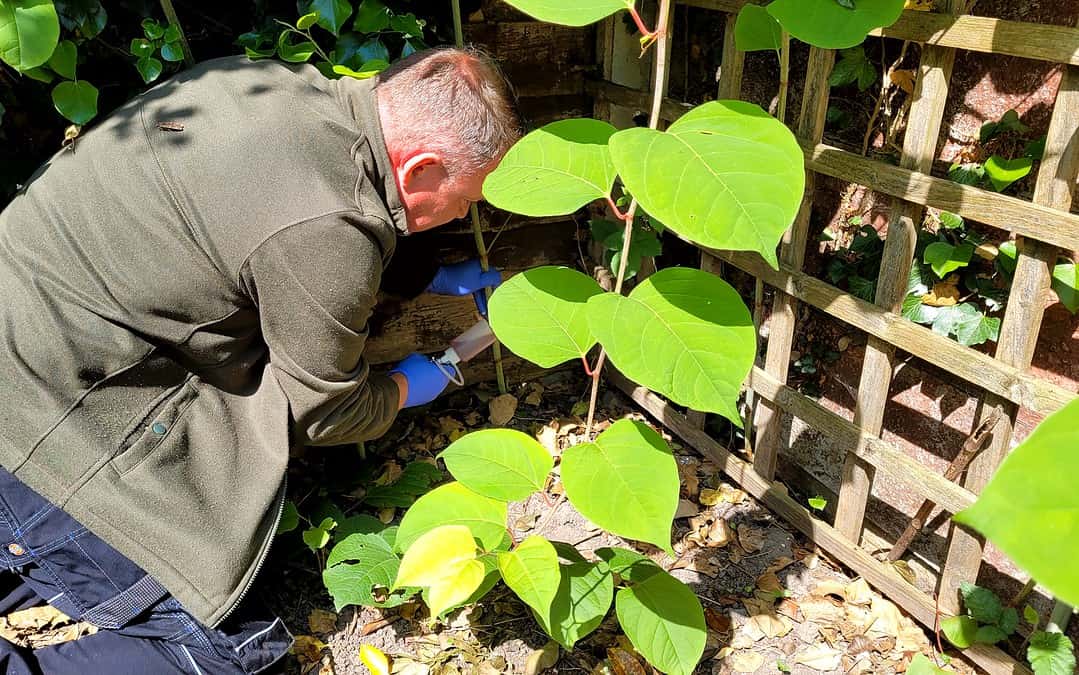
Specialists apply systemic herbicides over several growing seasons. This method offers the most cost-effective solution for many properties.
Excavation
Contractors can excavate contaminated soil and remove the rhizomes. This method is faster but more costly.
Professional Management Plans
Many specialist companies provide treatment plans with insurance-backed guarantees. These plans facilitate homeowners in selling or refinancing affected properties.
Avoid DIY removal. Disturbing the plant can spread it further.
Final Thoughts
Japanese knotweed originated in Japan but now threatens ecosystems and property worldwide. Its rapid growth and deep rhizomes make it difficult to control.
If a property owner discovers Japanese knotweed, Japanese Knotweed Plus can provide professional support to manage, remove, and document the issue properly.
Here’s what they can typically offer clients:
1. Professional Site Survey & Identification
They can:
-
Confirm whether the plant is Japanese knotweed.
-
Assess the size and severity of the infestation.
-
Map rhizome spread (especially near buildings)
-
Evaluate risk to neighbouring properties.
Accurate identification is essential, especially for mortgage or legal purposes.
2. Knotweed Management Plans (KMP)
If you’re selling or refinancing a property, lenders often require a formal management plan.
They can provide:
-
Structured multi-year treatment plans
-
Documentation suitable for mortgage lenders
-
Clear monitoring schedules
-
Written treatment specifications
This protects both buyers and lenders.
3. Herbicide Treatment Programmes
For most residential properties, they offer:
-
Professional-grade herbicide application
-
Multi-season treatment schedules
-
Targeted injection or foliar spraying
-
Ongoing monitoring
This is usually the most cost-effective solution.
4. Excavation & Removal
For urgent cases or development sites, they may provide:
-
Full excavation of contaminated soil
-
Licensed waste disposal
-
On-site burial solutions (where suitable)
-
Root barrier installation
This option delivers faster results but at a higher cost.
5. Insurance-Backed Guarantees
Many specialist companies offer:
-
Long-term guarantees (often 5–10 years)
-
Insurance-backed protection
-
Documentation for conveyancing
This helps maintain property value and buyer confidence.
6. Support with Property Sales
Japanese knotweed can affect:
-
Mortgage approval
-
Property valuation
-
Buyer negotiations
They can provide the documentation required to satisfy solicitors and lenders.
7. Commercial & Developer Services
For construction and land development projects, services may include:
-
Pre-development site surveys
-
Soil management strategies
-
Biosecurity planning
-
Ongoing monitoring compliance
This reduces legal and environmental risk.
Why Use a Specialist Instead of DIY?
DIY removal often:
-
Spreads the infestation
-
Invalidates mortgage options
-
Increases long-term costs
-
Creates potential legal disputes
Professional treatment protects your property and reduces liability.