
Why is it so hard to get rid of Japanese knotweed
Its extensive, deep root system, resilience, ability to grow in various environments and soil conditions, and invasive nature make it difficult to control.
With a professional treatment plan in place, it can be effectively managed and controlled over time. Consult with a professional surveyor who specialises in Japanese knotweed treatment to determine the best course of action for your specific circumstances.
Japanese knotweed is difficult to get rid of because of its extensive and deep root system.
Also known as rhizomes. These rhizomes can spread horizontally up to 7 meters (23 feet) from the parent plant and grow vertically to a depth of up to 3 meters (10 feet). This makes it difficult to remove all the plant’s underground structures, which can cause it to regrow if not properly treated.
Japanese knotweed is also highly resilient and can regrow from small fragments of the root or stem. This means that even if a small piece of the plant is left behind, it can continue to grow and spread.
Additionally, Japanese knotweed can grow in a variety of environments and soil conditions, making it difficult to control.
It’s also important to keep in mind that Japanese knotweed is considered an invasive species. It can outcompete native plants. blocking essential sunlight and making it difficult to control.
All of these factors make it difficult to get rid of Japanese knotweed. With a professional treatment plan in place, it can be effectively managed and controlled over time. It’s important to consult with a professional surveyor who specialises in Japanese knotweed treatment. He can determine the best course of action for your specific circumstances.
Be aware that you are not permitted to put Japanese knotweed in your household waste bins.
Japanese Knotweed is a highly invasive plant that can cause serious environmental and structural damage. Throwing it into a regular household waste bin or compost heap can result in the spread of the plant. This causes problems in other areas and exacerbates the problem.
The most effective and responsible way to dispose of Japanese Knotweed is to take it to a licensed landfill site where it can be safely contained. Engaging a professional removal company specialising in Japanese Knotweed to handle the disposal for you. These companies have the expertise and equipment to safely remove the plant and dispose of it in a manner that minimises the risk of spreading.
By properly disposing of Japanese Knotweed, you can help protect the environment and prevent the spread of this invasive species.
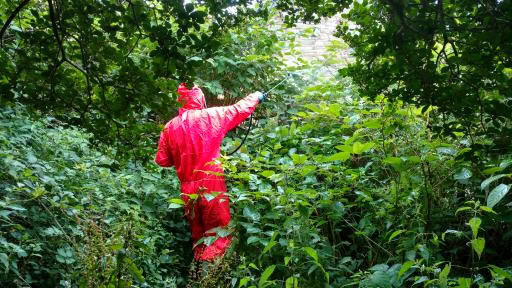
Japanese knotweed is commonly treated with herbicides, specifically glyphosate-based herbicides. The herbicide is typically applied to the plant’s foliage. It will then translocate to the roots and help to kill the plant over a long period of time.
The most effective treatment for Japanese knotweed involves multiple applications of herbicide over several years. This allows for the gradual reduction of the plant’s population and helps to prevent re-establishment.
Herbicides should only ever be used by trained professionals
It’s important to follow the label instructions and safety precautions when applying herbicides to control Japanese knotweed. As well as to seek professional advice and guidance. Additionally, some areas may have restrictions on the use of certain herbicides. So it’s important to be aware of local regulations.
for the treatment of the plant. These companies typically have the expertise, equipment, and herbicides needed to control invasive species effectively. They can also assess the extent of the infestation and develop a treatment plan tailored to your site’s specific needs.
Additionally, these companies are experienced in dealing with Japanese knotweed and will follow best practices. This ensures that the plant is controlled safely and effectively. While also complying with regulations and guidelines set by government agencies and professional organisations.
It is advisable to engage a specialised Japanese knotweed company.
This will ensure that the plant is treated properly, effectively, and in an environmentally friendly manner.
Japanese knotweed control companies aim to provide environmentally friendly treatments, but the methods used can vary. Some companies may use herbicides, which can have potential environmental impacts if not applied properly. Other companies may use physical removal methods or biological controls, which are typically considered to be more environmentally friendly.
It is important to research and compare the methods used by different companies.
To choose one that uses environmentally friendly methods that align with your values and concerns. Additionally, it is advisable to choose a company that follows best practices and industry standards. To ensure that the treatment is carried out safely and with minimal impact on the environment.
When considering Japanese knotweed treatment options.
It is important to balance the need to control the plant with the desire to minimise environmental impacts. A specialised Japanese knotweed company can help you find the right balance and provide effective, environmentally friendly treatment options.
Phone Stephen, our PCA-accredited Japanese knotweed surveyor on:07753682333