
Many property owners ask an important question:
Can you permanently get rid of Japanese knotweed?
The simple answer is yes, but the process takes time and careful management.
Japanese knotweed (Fallopia japonica) spreads through a powerful underground rhizome system.
Because of this, removing the visible plant alone will not solve the problem.
To achieve permanent control, the rhizomes must also be treated or removed.
Several professional treatment methods exist. The correct option depends on the size of the infestation, location, and plans for the land.
Herbicide Treatment
Herbicide treatment remains the most common method used in the UK.
This approach uses professional herbicides designed to move through the plant and reach the underground rhizomes. As the plant absorbs the herbicide, the root system gradually weakens.
However, Japanese knotweed stores large amounts of energy in its rhizomes. For this reason, treatment usually requires several applications over multiple growing seasons.
Most professional management plans run for three to five years with annual monitoring.
When applied correctly, herbicide treatment provides reliable long-term control.
Stem Injection Treatment
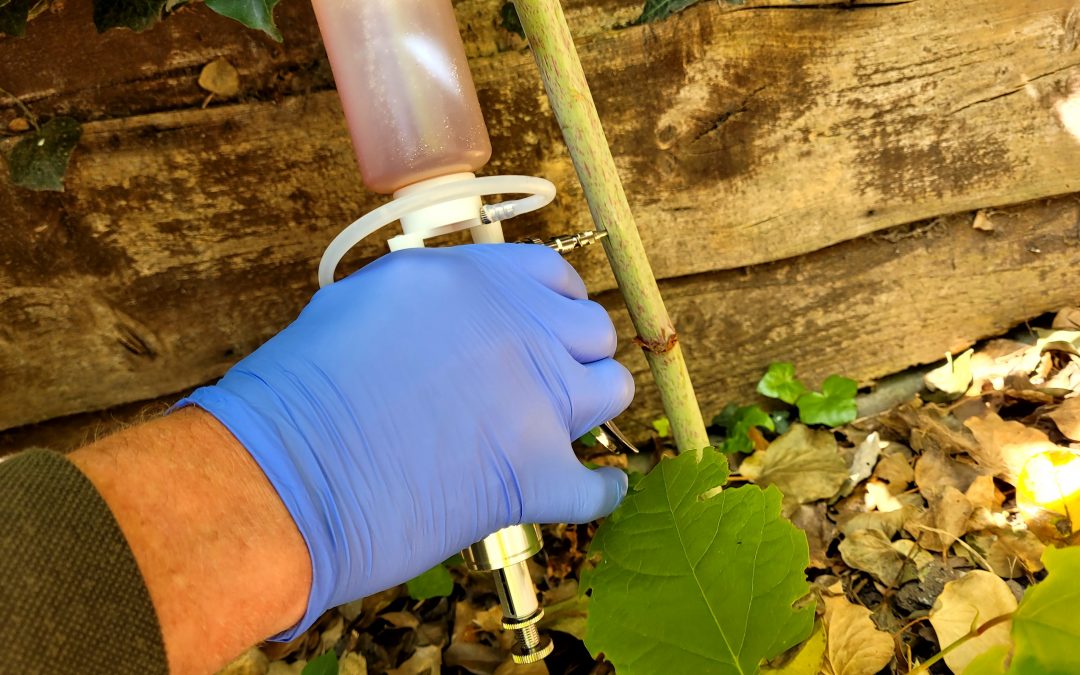
Stem injection offers a more targeted herbicide method.
This technique involves injecting a measured dose of herbicide directly into each hollow knotweed cane. The chemical then travels through the plant and into the rhizome system.
Stem injection works well for smaller infestations or plants growing near buildings and waterways.
Because the herbicide enters the stem directly, this method reduces spray drift and limits impact on surrounding plants.
Excavation and Removal
Excavation provides the fastest solution but also the most disruptive.
This method involves digging out the entire infestation, including contaminated soil containing rhizomes. The material must then be transported to a licensed landfill site.
Excavation can be effective on development sites where construction will disturb the ground anyway.
However, costs can be high. In addition, any rhizome fragments left in the soil may cause regrowth.
For this reason, excavation must be carefully managed by experienced contractors.
The Importance of the Rhizome System
Japanese knotweed survives because of its underground rhizomes.
These thick roots can spread several metres underground and store large amounts of energy.
Even a small rhizome fragment can produce a new plant.
This explains why cutting, mowing, or digging the plant casually often makes the problem worse.
Effective treatment must target the rhizome network.
Japanese Knotweed Dormancy
After treatment, Japanese knotweed can sometimes enter a dormant state.
Dormancy means the plant shows little or no visible growth for a period. However, the rhizome may remain alive underground.
Dormancy can last from several months to a few years, depending on conditions.
Because of this, monitoring remains essential even after treatment appears successful.
Professional Treatment Plans
A professional Japanese knotweed management plan provides the safest long-term solution.
Most plans include:
-
regular treatment visits
-
monitoring and inspection
-
detailed records of treatment
-
long-term guarantees
These plans also help property owners meet mortgage lenders’ requirements during property sales.
Need Expert Advice?
If you suspect Japanese knotweed on your property, early action is essential.
A professional survey will confirm the extent of the infestation and recommend the best treatment plan.
For advice or a survey, you can contact:
Stephen Singleton
PCA-Accredited Japanese Knotweed Surveyor
📞 07753 682333
Early identification and treatment can prevent the problem from spreading and protect your property’s value.